

Oncolytic virotherapy in modern cancer treatment
From research to clinical application
June 11, 2026.
School of Public Health “Andrija Štampar” Rockefeller Street 4, Zagreb, Croatia
Start at 2:00 PM
As part of the project “Development of Oncolytic Virotherapy for Cancer Treatment in Animals”, the University of Zagreb and the Centre of Excellence for Viral Immunology and Vaccines, in cooperation with the Croatian Academy of Medical Sciences and the Andrija Štampar School of Public Health, are organizing a scientific/expert symposium dedicated to modern approaches in oncolytic virotherapy and its clinical application. The symposium brings together national and international experts in virology, oncology, immunotherapy, and translational medicine, with the aim of presenting current scientific and clinical insights into the application of oncolytic viruses in the treatment of malignant diseases.
The event is intended for physicians, researchers, representatives of the healthcare and scientific sectors, and all those interested in the development of innovative therapeutic approaches in oncology.
Please find the program below this invitation.
Please find the original announcement HERE (croatian) / HERE (eng).
We look forward to welcoming you!
Sincerely,
Organizing Committee
Speakers
 Prof. Dr. med. dr. rer. nat. Guy Ungerechts / CV
German Cancer Research Center (DKFZ) and National Center for Tumor Diseases (NCT), Heidelberg
Lecture title: Immunovirotherapy – Clinical translation
Various early clinical trials with oncolytic viral vectors including Measles virus (MeV) for the treatment of different cancer types have been completed. To engineer next generation MeV vectors for more efficient immunovirotherapy we encoded various immunomodulators including immune checkpoint inhibitors (e. g. anti-PD1), bispecific T cell engagers (BiTEs), cytokines (e. g. IL-12), as well as tumor associated antigens (TAA) for monotherapy, and to explore combination with adoptive cell transfer (ACT) approaches. MeV-IL12 is our lead candidate for clinical translation and GMP manufacturing is currently ongoing. A phase I/II dose escalation trial in patients with advanced/metastasized solid tumour’s will be launched next year. Upfront, we treated four patients within an early clinical access program.
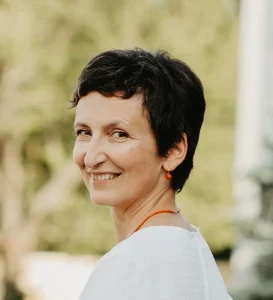
Dr. sc. Beata Halassy / CV
University of Zagreb, Centre for Research and Knowledge Transfer in Biotechnology
Lecture title: Oncolytic viruses as ex tempore, point-of-care preparations
Oncolytic virotherapy uses viruses as anticancer agents capable of selectively infecting and destroying malignant cells. Despite promising clinical potential, the translation of oncolytic viruses into routine clinical use remains limited by complex regulatory and manufacturing requirements. As an alternative approach, based on experience from successful experimental self-treatment1, we propose the development of ex tempore viral preparations manufactured at the point of care. The lecture will discuss the establishment of a detailed characterization framework to evaluate whether fresh viral preparations intended for immediate use can be reproducible, analytically well-defined, and clinically applicable. Emphasis will be placed on the potential of ex tempore oncolytic viruses as a novel medicinal product format and on their possible role in future personalized and precision-based cancer therapy approaches. 1Forčić et al. Vaccines 2024; 12:958

Prof. Dr. Tihana Lenac Roviš / CV
Center for Proteomics, Faculty of Medicine, University of Rijeka, Croatia
Lecture title: Development of novel nectin-based immunotherapies for cancer
Immune checkpoint inhibitors (ICIs) have demonstrated substantial clinical benefit in subsets of oncology patients; however, the majority of patients fail to respond due to diverse tumor immune evasion mechanisms. Among these, the poliovirus receptor (PVR, CD155) plays a role in suppressing anti-tumor immunity through multiple non-redundant pathways, including inhibitory signalling via TIGIT, CD96, and KIR2DL5A receptors. The lecture will present in vitro and in vivo studies dissecting the role of nectin family proteins and their receptors in tumor biology. We will discuss the development of novel antibody-based strategies, including anti-PVR monoclonal antibodies, and highlight their preclinical efficacy in restoring CD8⁺ T cell and NK cell function. Emphasis will be placed on PVR-targeted approaches, with focus on the translational development of the clinical-stage candidate NTX1088, currently being evaluated in early-phase clinical trials in combination with PD-1 blockade.
PRELIMINARY SYMPOSIUM PROGRAM
| THURSDAY, JUNE 11, 2026 | |
| TIME | TOPIC |
| 1330 – 1400
Vestibule |
REGISTRATION |
| 1400 – 1430
Large Hall |
OPENING CEREMONY |
| 1430 – 1530
Large Hall |
PLENARY LECTURE
PROF. DR. MED. DR. RER. NAT. GUY UNGERECHTS Immunovirotherapy – Clinical translation |
| 1530 – 1600
Vestibule |
COFFEE BREAK |
| 1600– 1630
Large Hall |
BEATA HALASSY, MD, PhD
Oncolytic viruses as ex tempore, point-of-care preparations
|
| 1630 – 1700
Large Hall |
PROF.D.Sc. TIHANA LENAC ROVIŠ
Development of novel nectin-based immunotherapies for cancer |
| 1700 – 1730
Large Hall |
ROUND TABLE |
| 1730 – 1830
Vestibule |
Reception |
* the organizer reserves the right to change the symposium schedule
Registration
The symposium is free of charge; due to the limited number of participants, we kindly ask you to register via the following link or QR code: REGISTRATION LINK.

If you experience any difficulties with registration, please contact us at sravlic@unizg.hr.
Online participation
Participants who are unable to attend in person my join the symposium online via Zoom.
Join Zoom Meeting: LINK
Meeting ID: 818 3650 2901
Password: 236561
Organizing Committee
Sanda Ravlić, Beata Halassy, Maja Lang Balija, Lucija Ivandić, Erika Gamulin, Anto Vrdoljak
Official language of the scientific/expert symposium
English
Symposium Sponsor

LKB Vertriebs GmbH, Zagreb Branch
New Road 103
HR-10000 Zagreb, Croatia